
Removing Years of Buildup From Exterior Surfaces
Pressure Washing in Long Island for properties where dirt and grime obscure original surface appearance
Accumulated dirt, organic growth, and weathering residue change how exterior surfaces look and how well subsequent treatments adhere. Pressure washing uses high-pressure water to remove these layers from driveways, walkways, siding, and decks, though the cleaning approach must match the material being treated—concrete withstands different pressures than wood or vinyl. Seal N' Shine Co adjusts nozzle selection, water pressure, and cleaning distance based on surface type and contamination level across Long Island properties, where salt exposure and humidity accelerate buildup.
The service addresses both routine maintenance and pre-project preparation, since many coatings and sealers require clean substrates to bond correctly. Pressure washing removes what sweeping and hosing cannot, exposing the original surface so you can assess its condition and decide whether additional work is needed.
Identify the exterior surfaces requiring attention and request an estimate based on material type and current condition.
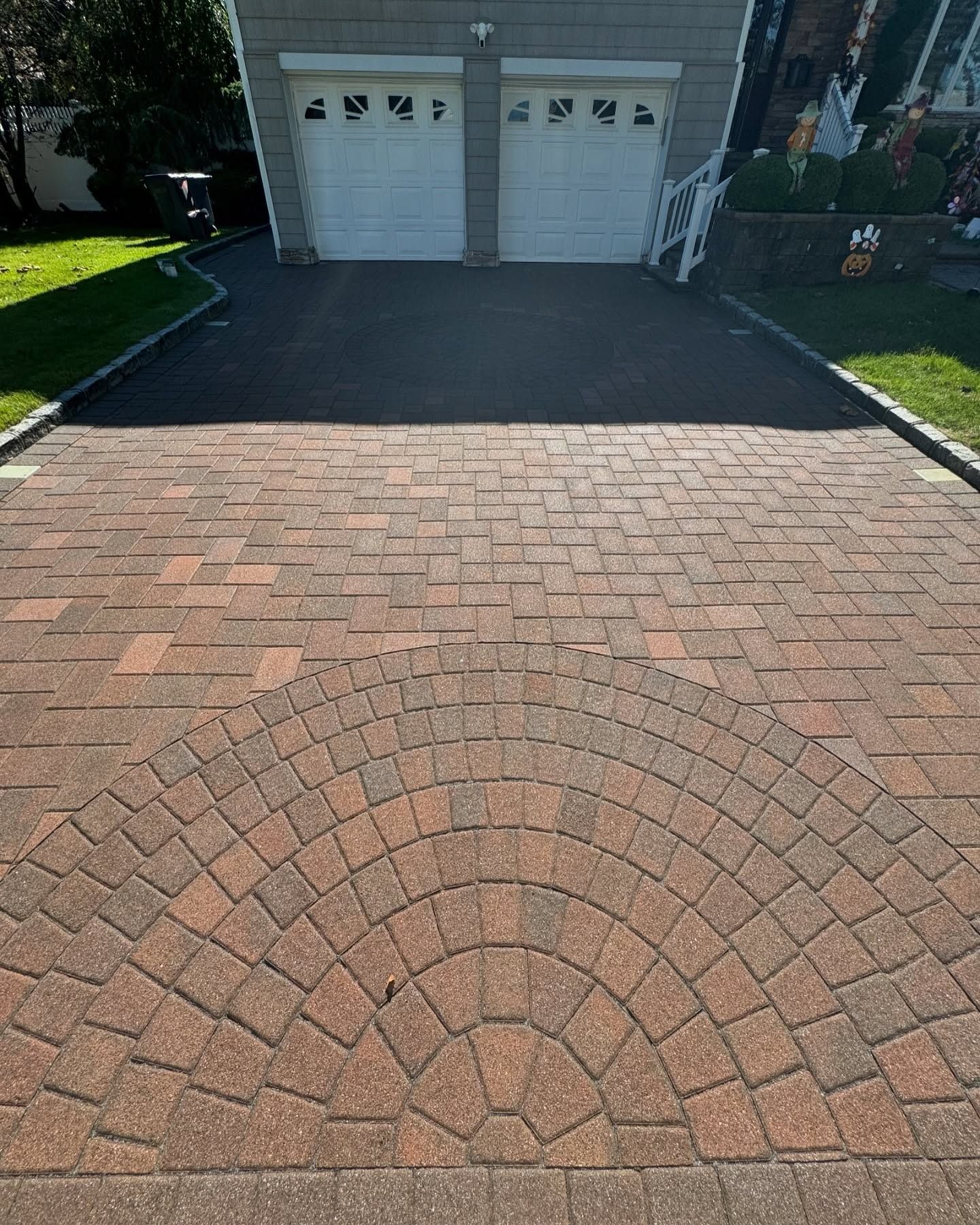
What Pressure Washing Actually Accomplishes
The pressurized water stream dislodges embedded dirt, algae, mildew, and efflorescence that have bonded to the surface over months or years of exposure. Nozzle angle and spray pattern determine how aggressively the water acts—wider fan patterns spread pressure across a larger area for delicate surfaces, while narrow streams concentrate force for stubborn stains on concrete or masonry.
After cleaning, the surface appears lighter and more uniform in color, and you can see the texture and condition of the underlying material clearly. Seal N' Shine Co cleans driveways, patios, walkways, building exteriors, and decks throughout Long Island and Nassau County, adjusting technique to avoid damage while removing the layers that obscure the original finish.
Timing matters when pressure washing is part of a larger project—surfaces must dry completely before applying sealers, stains, or coatings, and weather conditions affect drying time, particularly in humid coastal climates where moisture lingers longer than in drier regions.
Answers to Frequent Service Questions
Nassau County clients often ask how pressure washing fits into routine property upkeep and what surfaces respond well to the service.
What surfaces can be pressure washed?
Concrete, brick, stone, vinyl siding, and some wood surfaces respond well to pressure washing, though each material requires different pressure settings and nozzle configurations to avoid etching, splintering, or surface erosion.
How does pressure washing prepare surfaces for other work?
Removing dirt, algae, and old residue allows coatings and sealers to bond directly to the substrate rather than to a contaminated layer, which improves adhesion and extends the life of the applied treatment.
When should pressure washing be scheduled?
Routine cleaning can be done annually or as needed when buildup becomes visible, while pre-project cleaning should occur far enough in advance to allow complete drying before any subsequent application.
What happens to stubborn stains during cleaning?
Many organic stains and dirt layers lift away under high-pressure water, but some discoloration may be intrinsic to the material—rust stains, deep oil penetration, or mineral deposits sometimes require chemical treatment beyond pressure washing alone.
How does Long Island's coastal climate affect exterior buildup?
Salt air, high humidity, and frequent precipitation across Long Island accelerate the growth of algae and mildew on exterior surfaces, which means cleaning intervals may be shorter than in drier inland areas.
Seal N' Shine Co evaluates surface material, contamination type, and project goals before beginning pressure washing work. Contact the team to schedule cleaning for your Long Island property and discuss the appropriate approach for each exterior area.